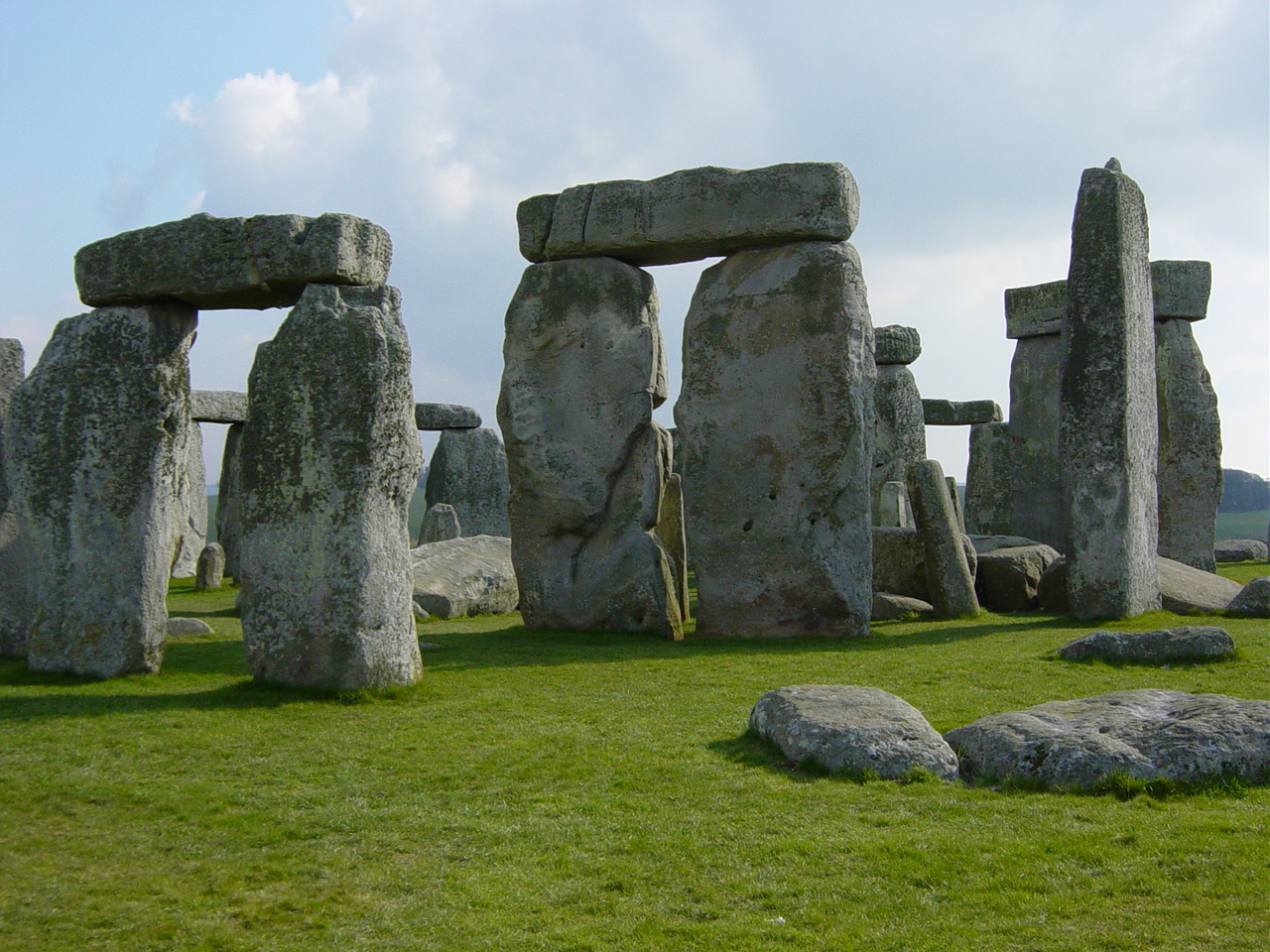
Stonehenge Location

By on May 16, 2013 in Uncategorized with 0 Comments

Stonehenge is located in Salisbury plain in Wiltshire, England. It is not just one big structure, it’s made of a series of seven different kinds of stones but the majority of it is Sarcen, which is hard sandstone. It is also made of Bluestone; rocks from the Welsh Preseli Mountains. There are very many different kinds of people who have put thought into who built Stonehenge, some of those thoughts included druids, Greeks, Phoenicians and Atlantians. There are also many different theories on why it was built including for human sacrifice to astronomy. The Stonehenge was a much respected piece of art during 2000 BC.


In its day, the construction of Stonehenge was a really big deal; it required commitment, time and huge amounts of hard labor. In its first phase, Stonehenge was a large earthwork; a bank and ditch arrangement called a henge, was made about 5,000 years ago. It is believed that the ditch was dug with tools made from the antlers of red deer and, possibly, wood. It was then loaded into baskets and carried away. More recent experiments have shown that these tools were more than equal to the great task of earth digging and moving. Some people claim it was created by many different people over a long period of time. The actual building process of Stonehenge was very complicated. Its origin is controversial. Believers say it was the creation of Merlin the magician, while some owe it to extraterrestrials. Stonehenge’s association with druids dates only from 1905, and has no historical basis, but there are claims that druids gathered near this monument to invoke the Gods and that it served for some magical purpose.

The Stones of Stonehenge

By on May 19, 2013 in Uncategorized with 0 Comments

There are two different stones found at Stonehenge. Both of which have been said to be found on other areas of the British Isles. The smaller stones used at the site are a type of stone called, Bluestone. There are 82 blustones found at Stonehenge each of which measure to be eight feet tall and weigh around 4 tons a piece. There are many different variations of the blusestone and four of these variationshave been collected at Stonehenge.
As for the larger stones, these are known as sarsens. These sarsen stones have been described as huge unrealistic rocks that have a density harder than granite. These stones have been researched and were said to have formed on the seabed and then broken apart when the seabed raised to level with the land. they broke apart in huge boulder sized pieces which explains the sarsens immense size. Sarsens at Stonehenge weigh around 26 tons, the largest sarsen is around 45 tons. Sarsens are the large veritcal stones that stand at 13 and a half feet tall and are as thick as 7 feet. On top of these large stones are smaller stones called lentils that lie across the tops of two sarsens horizontally. Although these stones aren’t as large they are still several tons in weight.
How these stones got to Stonehenge is still a cause for debate as the blue stones came from much afrther away than did the sarsens.


Scientists have come up with several theories on how the strones were transported from such great distances. It is estimated that it would have taken sixteen men per ton of stone to move them to Stonehenge. There is no evidence that these stones were moved and then immediately constructed. They could have been piled up and saved for future use. They would have had to use waterways were they were pinned between two hollow canoes or on rafts that were crafted from wither wood or animal skins. Since they used mainly waterways to transport these rocks they would have only been able to move them in the summer when the water was calm and the weather suitible for hard labor.
There is also a possibility that the stones were deposited by stonehenge from an ice that occured about a half a million years ago. The stones could also have been slid over ice sheets and transported to Salisbury.

Top